

Teacher Training: Applied Anatomy & Physiology for Yoga
- Prajnananda (Marcio da Rosa)

- Dec 20, 2025
- 4 min read
Our teacher training is not about anatomy alone — quite the opposite.
Much of this training is about becoming a better human being: learning how to listen, how to observe, how to regulate ourselves, how to communicate with kindness, and how to teach in a way that is respectful, inclusive, and grounded in lived experience rather than performance.
Yoga, as we teach it, is a path of personal development first — physical practice is one of its expressions, not its limit.
That said, people do come to yoga with bodies. They come with tension, habits, injuries, stress, fatigue, and questions about movement.
So in this Foundation course, we include Applied Anatomy & Physiology not to reduce yoga to biomechanics, but to help future teachers understand what yoga is doing to the physical body — how movement, breath, and awareness interact to create adaptation, resilience, and change.
The article that follows explores yoga through a movement-based A&P lens: how muscles activate and coordinate, how joints organise safely, how mobility and strength develop together, and how the nervous system learns through practice.
This is one perspective among many — a practical one — offered in service of clearer, safer, and more effective teaching.
Yoga remains bigger than the body. But understanding the body helps us serve people better.
Stretching, Muscle Action, and Intelligent Movement
In yoga, we often speak about stretching, but stretching alone is an incomplete—and sometimes misleading—way to understand what is happening in the body.
Yoga is not simply about lengthening tissues. Yoga is about coordinated movement, muscle activation, joint organisation, and neuromuscular re-education.
Understanding this changes how we teach.

Stretching in Yoga: More Than “Pulling”
In common language, stretching means pulling a muscle longer. In the body, however, flexibility is rarely limited by muscle length alone.
Range of motion is influenced by:
nervous system tone (safety vs threat)
coordination between muscles
joint structure
breath patterns
habitual movement strategies
psychological guarding
This is why forcing stretches rarely creates lasting change—and often leads to strain.
Yoga works best when stretching happens as a result of intelligent movement, not as an isolated goal.
Muscle Action: Three Key Types
Every yoga posture involves multiple muscle actions happening at once.
1. Concentric contraction
The muscle shortens while producing force.
Example:
lifting the arms overhead
rising from the floor
stepping forward in a lunge
2. Eccentric contraction
The muscle lengthens while still active.
This is extremely important in yoga.
Example:
lowering into a forward fold with control
slowly descending from standing to seated
controlling the descent in a squat or chair pose
Eccentric work builds strength, control, and joint protection—not just flexibility.
3. Isometric contraction
The muscle activates without changing length.
Example:
holding a posture steadily
stabilising the spine in seated poses
maintaining balance in standing postures
Most yoga postures are primarily isometric, with subtle concentric and eccentric actions layered in.
Agonists, Antagonists, and Synergy
To move intelligently, muscles work in relationships, not isolation.
Agonist
The prime mover—the muscle primarily responsible for an action.
Example:
quadriceps in knee extension
gluteus maximus in hip extension
Antagonist
The muscle that performs the opposite action and must lengthen or yield.
Example:
hamstrings during knee extension
hip flexors during hip extension
Healthy movement depends on a balanced relationship between agonist and antagonist—not dominance of one over the other.
Synergists
Supporting muscles that assist, stabilise, or refine the movement.
Example:
deep spinal stabilisers supporting larger back muscles
hip stabilisers supporting standing poses
shoulder stabilisers supporting arm movements
Yoga is particularly effective at training synergy, because poses demand whole-body coordination rather than isolated effort.
Why Yoga Improves Mobility (Not Just Flexibility)
Mobility is usable range of motion with control.
Yoga improves mobility because it:
trains muscles to lengthen while active
integrates breath with movement
improves joint awareness (proprioception)
reduces unnecessary tension patterns
teaches smooth transitions, not just end shapes
This is why a student may become “more flexible” without aggressively stretching—and why they often move with more ease in daily life.
Coordination and Neuromuscular Re-education
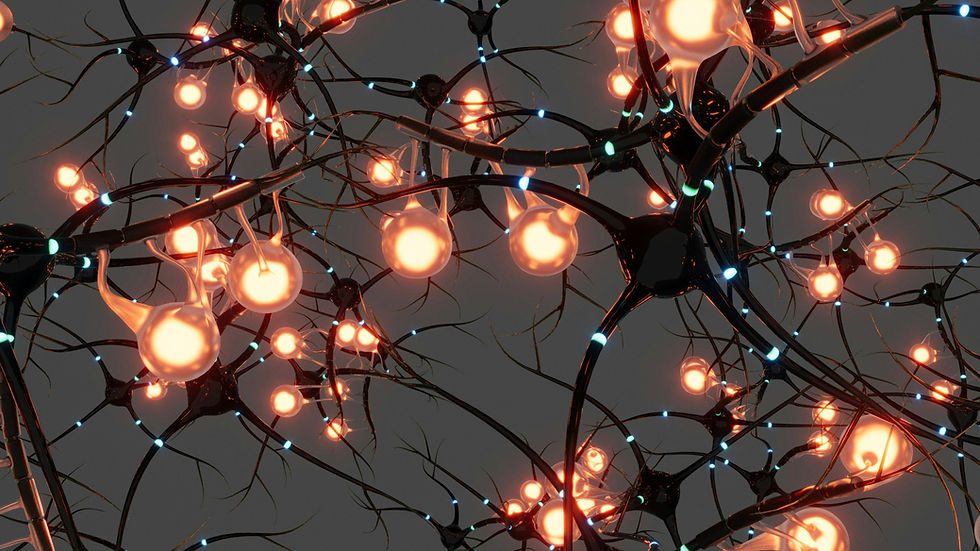
Many limitations are not structural—they are neurological.
The brain learns movement patterns through repetition. Yoga offers:
slow, mindful movement
clear sensory feedback
symmetrical and asymmetrical loading
conscious transitions between positions
Over time, this re-educates:
how muscles fire
how joints are stabilised
how effort is distributed
how the nervous system perceives safety
This is why consistent yoga practice can improve posture, balance, and movement confidence—even without dramatic changes in muscle size.
Strength in Yoga
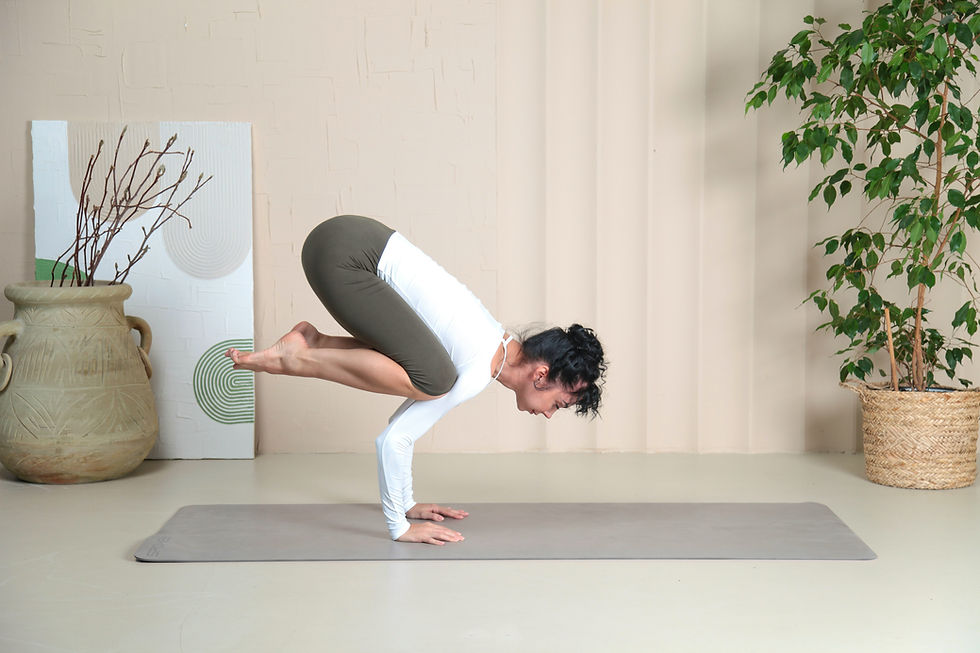
Yoga develops strength in a functional, integrated way.
Rather than isolating muscles, yoga builds:
postural strength
stabilising strength
endurance strength
joint-protective strength
Many postures require low-load, long-duration muscle activation, which is especially valuable for joint health and long-term resilience.
This is different from—but complementary to—gym-based strength training.
Bone Density and Load
Bone responds to load, not repetition alone.
Yoga contributes to bone health by:
applying weight through the skeleton
loading bones from multiple angles
encouraging balance and coordination (reducing fall risk)
promoting upright posture and spinal integrity
Standing poses, weight-bearing arm work, and controlled transitions all contribute to this effect.
Yoga as Whole-System Adaptation
When we teach yoga through a movement lens, we see that practice affects multiple systems simultaneously:
muscular: activation, length, endurance
skeletal: alignment, loading, density
nervous: regulation, coordination, perception of safety
respiratory: breath efficiency and control
psychological: confidence, awareness, self-trust
In traditional language, this may be described as balancing prāṇa.In modern language, we can describe it as integrated physiological adaptation.
Both perspectives point to the same lived experience.
For Teachers: What Matters Most
At Foundation level, you do not need to memorise muscle charts.
What matters is that you can:
recognise effort vs strain
cue stability before range
encourage coordination over force
observe how breath reflects effort
adapt movements without diminishing dignity
Yoga is not about “doing more”. It is about doing enough, well, and repeatedly.
That is where real change happens—physically, mentally, and energetically.



Comments